The Black Memory Workers (BMW) is a group of Black-diasporic archivists, curators, educators, stewards, genealogists, family historians, community organizers, oral historians, technologists, artists, creators, storytellers, and students that are committed to practicing care and intention as we prioritize the documentation, long-term preservation, and celebration of Black life and experiences. As Black memory workers, We are in the business of ethically stewarding and attending to Black life and its afterlives in our every day, our memories, our histories, our communities, in institutions, under our mattresses, at grandma’s house, and in our attics, and anywhere We are. Even as Black life continues to hang in the balance,¹ We collaborate, infiltrate, and agitate together and ensure that the materials and memories of our lives are protected, preserved, and made accessible.
Beginning as a virtual gathering of 30 memory workers in June 2020, this multi-hyphenated group has grown to 200+ members that meet monthly and participate in on and offline discussions on how to sustain and better support our work with(in) Black communities while prioritizing care over capital. In the same ways that our living rooms walls were our first archives, The Black Memory Workers is a living (and breathing) space — a space for Black memory workers to hold each other and work with our communities to hold our histories. A holding space — not to hold Black collections in closed repositories, but hold as in in your arms, as in holding because it hurts or in spite of the hurt, hold as in holding up, supporting, having or holding space for, maintaining, providing safe, autonomous spaces with Black legacy, world-building, and preservation at the center.
Our Story
The Black Memory Workers was founded at the height of the Covid-19 pandemic and protests against police violence. We collectively authored and offered a call to action to ethically and comprehensively archive the Black experience with Black memory workers at the forefront and to call attention to the oppressive systems both inside and outside of archives and libraries that disproportionately subject Black people to generational violences and extractive institutional efforts to document our experiences. “Black memory…is often at odds with state memory” and The Black Memory Workers emerged and continued to build community to hold Black memory with care while holding traditional archival institutions accountable to ensure that our histories do not continue to be not ignored, suppressed, or erased.² We charge institutions, scholars, reporters, writers, and others to look to Black memory workers to lead discussions, initiatives, and collecting efforts related to Black memory and archives. We are the stewards, the ones who “track down a speech here, an unmixed song there, call for reunions of activists, organizers, agitators, and cadres. [We] seek to recreate a sound or a feeling of yesteryear, resuscitate a waning political tendency or form of political mobilization.”³ We are the ones, the archives’ day ones, and we don’t take that responsibility lightly.
We reject attempts to document this moment that fails to center the Black experience or that fails to document the facts about the State’s role in inflicting Black pain. We commit to modeling care in our memory work because Black people deserve care. We commit to doing ethical memory work that protects Black people because racist state-sanction violence also resists documentation. We commit to archival practices that support accountability and historical accuracy because when the dust settles attempts will be made to rewrite the history. We commit to an intersectional archival practice that also presents a global perspective of Black suffering and the response to it because we acknowledge that Black people with disabilities, and from working-class, queer and immigrant communities have suffered negative and disproportionate harm due to white supremacy and capitalism. We believe that Black memory workers should lead the documentation response when Black people are suffering. And we believe Black memory workers should be supported and given the space and resources to do this work.Call to Action: Archiving State-Sanctioned Violence Against Black People,
Black Memory Workers
June 6, 2020
¹ Hartman, Saidiya. Lose Your Mother: A Journey Along the Atlantic Slave Route. New York: Farrar, Straus and Giroux, 2007, 6.
² Hanchard, Michael. “Black Memory versus State Memory: Notes toward a Method.” Small Axe: A Caribbean Journal of Criticism 12, no. 2 (June 1, 2008): 45–62. https://doi.org/10.1215/-12-2-45.
³ Hanchard, Black Memory versus State Memory, 46
Featured Black Memory Workers
-
![]()
"It is because of Black Memory Workers, that I have been able to hire and collaborate with over 50 Black Memory Workers since its inception. This collective effort is a testament to our ancestor's audacity and resilience. BMW is a living reminder of why I am grateful for our people committed to preserving our stories and legacies.”
Syreeta Gates, Archivist & Founder of The Gates Preserve
-
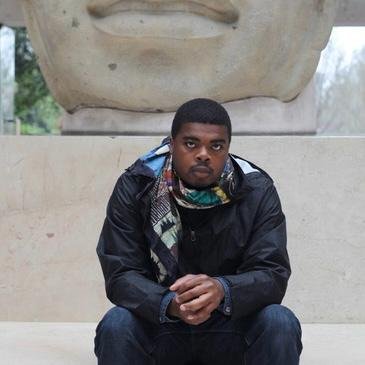
![image of Sed Miles in front of statue wearing black]()
“Black Memory Workers is an institution that is incredibly needed in times like these. It’s centered in love, wisdom and dedication. Being in community with BMW has been critical in our international memory work."
Sed Miles, Founder and Director, Atlantic Archives, USA / Brazil
-
![]()
“Being in a community with so many brilliant and talented archivists continues to be an insightful, encouraging, and affirming experience. Black Memory Workers as a collective, understand the value of preserving history across the African diaspora and never hesitate to share resources. When developing new projects, special collections, or consulting with cultural organizations, I always come back to the BMW group to connect with memory workers who possess a wide range of expertise and experience. I'm so grateful we have a space to connect and I'll continue to be a lifelong member of this group.“
Camille Lawrence, Archivist, Founder of Black Beauty Archive & #BlackGirlInTech
-
![image of Steven G. Fullwood]()
"Black Memory Workers understand the critical need to archive and tell our own stories. Talking to each other, sharing projects, recommending resources, and each other for gigs are just a few of the benefits of sharing space with these dynamic, visionary people. It’s a pleasure to connect with folks who already get what you’re trying to do. No preface. No essentialism. No why is this important to do? BMW knows we must archive Black people’s history and culture in many ways and everywhere – inside and outside of traditional archival institutions. And we do it exceptionally well. "
Steven G Fullwood, Co-founder, Nomadic Archivists Project
-
![]()
"As a Black woman entering the archive field (especially in the predominantly white fashion industry), it was hard to come by other archivists who looked like me. That all changed when I joined the Black Memory Workers in 2020. Although the unjust murders of Black civilians at the hands of police brutality brought us together, we continue to sharpen the iron of our community so that we collectively wield a mighty sword of knowledge."
Tianni Graham Chief Curator & Founder, archivealive
Archives & Special Collections Manager, Thom Browne -
![]()
“Black Memory Workers has connected me with job opportunities, collaborators, and contemporary conversations in the field of libraries and archives. Most of all, BMW has provided me a sense of community when I needed it most. Speaking with such talented and passionate professionals helped me find my place in the field. BMW is helping weave a bright future for cultural preservation.”
Nic Caldwell, Metadata Librarian and Curator
-
![]()
“I joined Black Memory Workers in 2022. It has been great to share space with like-minded professionals where archival work and preservation within the Black community is centered. We celebrate and learn from each other, work together to amplify each other’s initiatives, increase visibility on projects and encourage each other to realize our goals. Yes, BMW is great for networking, but we also genuinely care about each other and take joy in seeing each other succeed.”
Whitney Christopher, Automation Librarian & Digital Archivist
-
![]()
The Black Memory Workers Network has been an invaluable resource as an early career archivist and oral historian. The resources shared in the listserv and thought partnership exchanged during the monthly meetings have assuaged my feelings of loneliness and intimidation as a Black archivist of multiple oppressed identities. When we were looking for a transcriptionist for our oral history project, we connected with a network member who advertised their services on the listserv. Because the network does a good job of bringing together the expertise and cultural perspective needed in African American heritage preservation, we moved through the transcription and oral history archival process smoothly and efficiently.
Ashby Combahee, Library & Archives Program Manager, Highlander Research and Education Center
-
![]()
“Since the first meeting I’ve attended, Black Memory Workers have wrapped their arms around me and my work with Build Your Archive. This community is thriving because we support each other in both our work and our lives. I have had the privilege to meet and work with a number of archivists and librarians in our group. BMW has provided me with opportunities like speaking on panels, producing workshops in libraries and extending their expertise to the artist I work with. Black Memory Workers has allowed me the space to grow, learn and connect from the brightest in the field as an emerging memory worker. There is a deep love that goes beyond the virtual room that we gather monthly and it is made tangible in the real world in how we show up for each other. “
Sierra King, Archivist, Artist, Curator
-
![]()
“Black Memory Workers centers our stories and expertise while affirming that our commitment to cultural preservation is more than a career path, it is a collective charge. I have learned so much from this vibrant community and the brilliance of its members and am uplifted by the ways our love for our histories and each other remains central to our work.”
keondra bills freemyn, Archivist, Founder of Black Women Writers Project

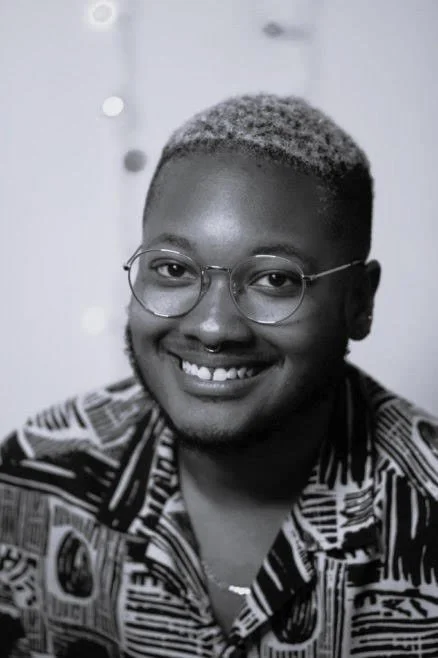
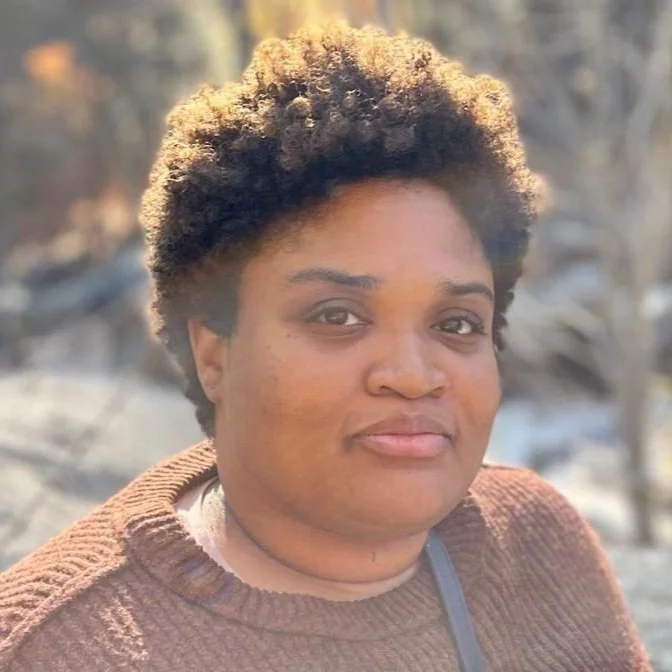
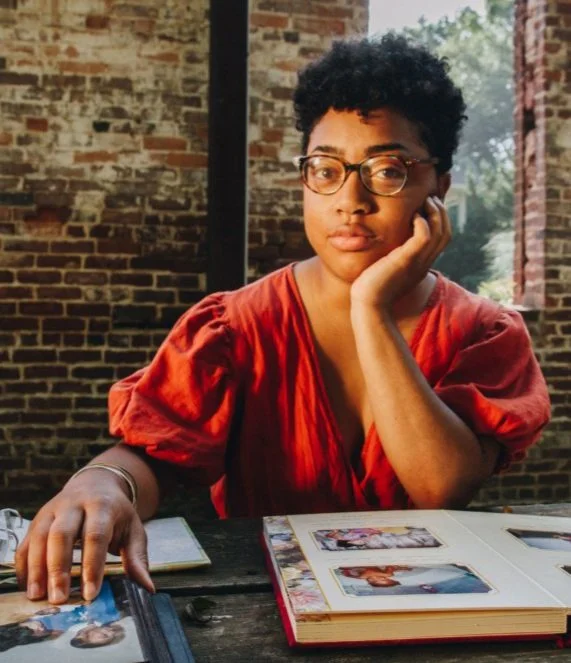
Upcoming Events & Opportunities
November 15 - January 2025
The ACHE Project x ADEFRA: Grassroots Community Building Across Borders Exhibition
Black Lesbian Archives, Curator
Stonewall National Museum, Archives, & Library
Ft. Lauderdale, FL
October 17, 2024
The Black Metropolis Research Consortium Annual Meeting
Black Metropolis Research Consortium
Woodson Regional, Chicago, IL & Online.
November 7, 2024
Backstage: An Unfurling of the JPC | Beauty & Fashion
Getty Research Institute
Online.
October 16, 2024
Archiving the Black Web x Webrecorder Present:
Web Archiving with Browsertrix
Archiving the Black Web
Online.
News & Updates
BMW Press
-
Blaek Joy, Reckon News
by: MacKenzie River Foy
Read it here! -
Metropolitan Archivist. Fall Issue: Invisible City
by: Megan Williams & Zakiya Collier -
Sustainable Futures, Medium
by: Zakiya Collier and The Black Memory Workers
Read it here!
-
Tianni Graham, Chief Curator & Founder of archivealive and Archives & Special Collections Manager at Thom Browne, works on the new documentary Hip-Hop and the White House. Now streaming on Hulu.
The first installment in Andscape’s new documentary series “&360” exploring untold Black stories in sports and culture, the film chronicles how the culture went from ignored and misunderstood by presidential administrations to embraced for its unparalleled influence on American youth.
-
Black Bottom Archives (BBA) announces the triumphant return of the Black Bottom Street View (BBSV) exhibit to Bert’s Warehouse, a cornerstone of Detroit’s historic Black Bottom neighborhood. From July 6th to 28th, 2024, the exhibit will be available for free public viewing at Bert’s Warehouse in Eastern Market, located at 2727 Russell Street, Tuesday through Sunday, from 11 am to 7 pm.
This year’s exhibit will also debut new oral histories and archival materials collected over the past year as part of BBA's Sankofa Community Research project. These new elements will provide fresh insights and deeper connections to the Black Bottom community’s legacy.
Mark your calendars for the grand opening celebration on Saturday, July 6, 2024, from 12 pm to 3 pm at Bert’s Warehouse. This event is free and open to the public, with all funds raised going towards supporting the ongoing preservation and expansion of the exhibit.
To share a story, make a donation, or learn more visit www.blackbottomarchives.com or contact Marcia Black (mblack@blackbottomarchives.com)
-
BlackSpace and the BHH team is celebrating the grand opening of Brownsville Heritage House’s long-awaited Reading Room!
This third-space inspired living room is filled with OUR history ~ Rare books, precious records, iconic magazines, and more from our rich collection will be open to the public to explore!